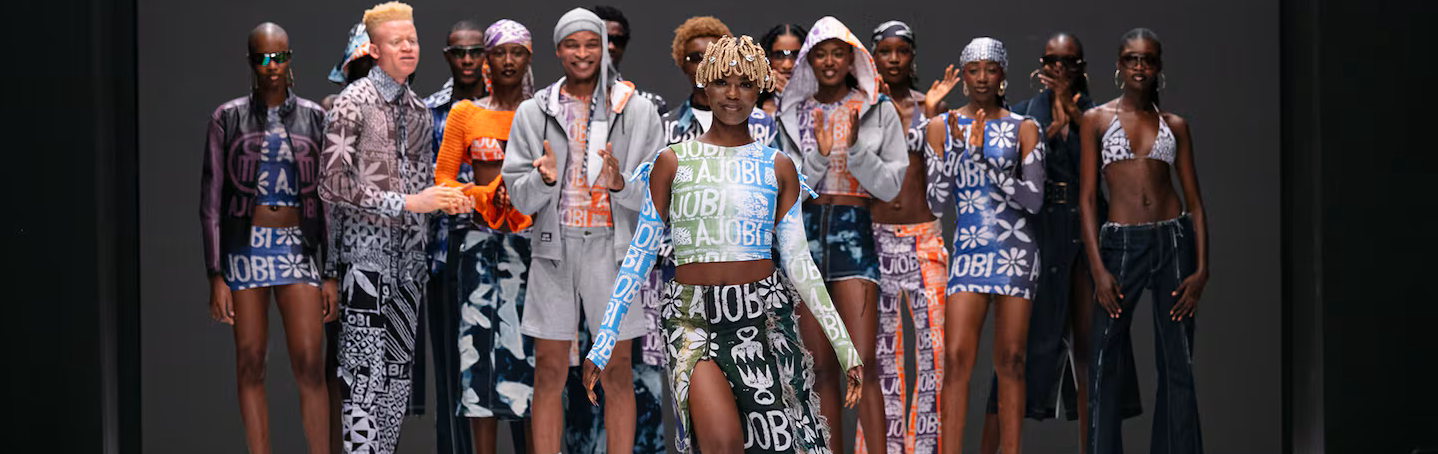
What if fashion could help heal the planet? For Lagos Fashion Week founder and Earthshot Prize laureate Omoyemi Akerele, that question isn’t theoretical. From the vibrant streets of Lagos, Nigeria to global sustainability platforms, Omoyemi is showing that creativity and culture can power climate solutions. Her story reminds us that innovation doesn’t always begin in a lab — it can spring from heritage, community, and a daring vision of change.
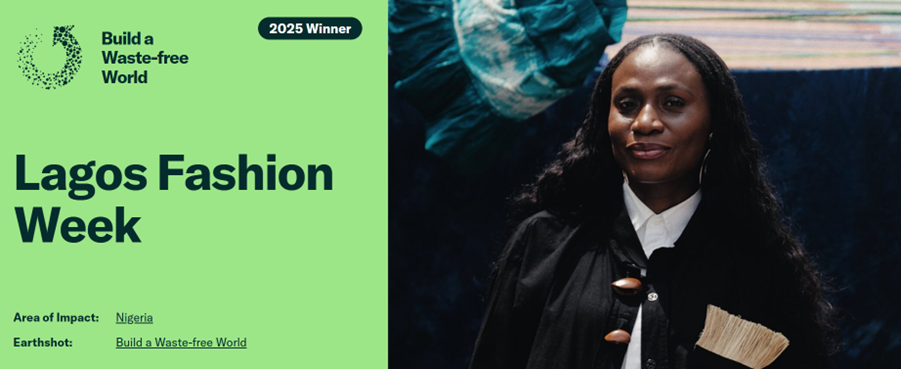
Omoyemi Akerele, founder of Lagos Fashion Week and winner of the 2025 Earthshot Prize. (Credit: The Earthshot Prize)
From Law to Fashion: Doing the Research and Taking Responsibility
Omoyemi’s path to climate-conscious fashion started far from the runway. While earning her LLM at the University of Warwick, she explored the environmental toll of oil companies in Nigeria’s Niger Delta — a pivotal experience that exposed the human cost of pollution and reshaped her worldview.
“That early work shaped me deeply,” she says. “It opened my eyes to how development, people, and the environment intersect. When I transitioned into fashion, I carried that same lens with me.”
For Omoyemi, fashion was never just about aesthetics. It became a platform for economic empowerment, environmental stewardship, and meaningful change.
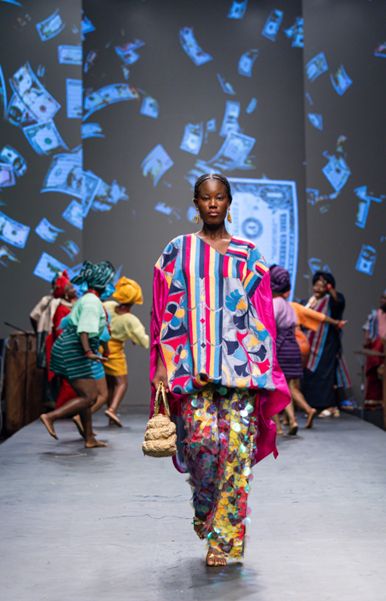
Model on the runway for Heineken’s “Cities of Cities” campaign at Lagos Fashion Week 2025. (Credit: Omoyemi Akerele, Lagos Fashion Week)
Lagos Fashion Week: Where Creativity Meets Climate Action
When Omoyemi launched Lagos Fashion Week, sustainability was barely a part of Africa’s fashion discourse. Today, the platform is a catalyst for transformation, championing circularity, regenerative practices, and cultural heritage as tools for climate action.
“Africa has always practiced circularity — repair, reuse, upcycling — long before it became a global trend,” Omoyemi says. “Our opportunity is to show that sustainability can be culturally rooted, community-led, and regenerative.”
From waste-to-value techniques to tech-enabled circular systems, Lagos Fashion Week demonstrates that heritage and innovation can coexist — and synergize.
Caretakers of Creation: The Values Behind the Mission
For Omoyemi, sustainability isn’t just a professional goal — it’s rooted in a deeper sense of purpose. She draws inspiration from her Christian faith, seeing environmental stewardship as a responsibility entrusted to humanity. “[T]he story of the Garden of Eden is such a powerful reminder that the environment was entrusted to humanity,” she tells me. “Adam and Eve were placed in the garden ‘to tend and keep it,’ and that mandate of stewardship has never changed.”
The Bible offers principles that guide Omoyemi’s work and shape her vision of fashion as a force for good. “[W]e’re not just inhabitants of the Earth; we are caretakers. Stewarding what’s been placed in our hands calls us to nurture, protect, and restore the world we live in,” she says.
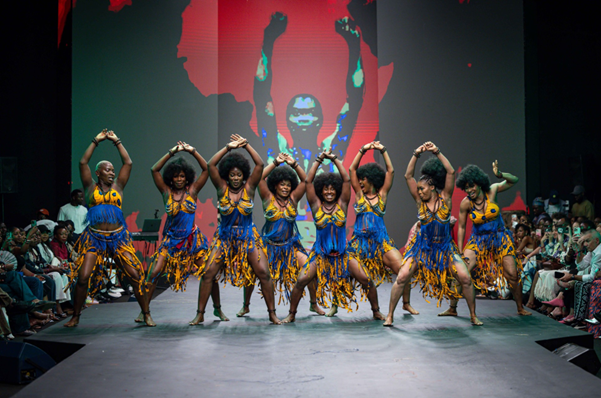
Afrobeat performers during the “Cities of Cities” campaign at Lagos Fashion Week. (Credit: Omoyemi Akerele, Lagos Fashion Week)
Making a Difference: Milestones Big and Small
Launched by Prince William in 2020, the Earthshot Prize spotlights international changemakers “who turn bold ideas into solutions for our planet.” Omoyemi was honored to be named a 2025 winner in the “Build a Waste-free World” category for her work on Lagos Fashion Week — the first ever instance of a fashion platform earning the prestigious prize.
Recognition like this means a lot, but Omoyemi insists her day-to-day victories — helping designers find their voice, giving artisans visibility, and empowering communities with sustainable practices — are even more important.
Challenges and Lessons Learned
On the road to making her bold vision a reality, Omoyemi had to overcome perceptions that sustainability was a “luxury” or “Western” concept that wouldn’t be viable in Africa. She also faced an uphill battle accruing visibility and respect as a thought leader. Her response? Persistence, collaboration, and reframing sustainability as a practical, culturally relevant solution.
“Change rarely happens in isolation. Building strong networks, bringing people along with clear communication, and showing how sustainable practices create both social and economic value has been key,” she says.
“The insight I hope others take from my experience is that persistence matters. Sustainability is not just an idea — it’s a practice that requires adaptability, courage, and a long-term vision. By staying committed, framing sustainability in a way that resonates locally, and lifting others as we go, meaningful change is possible even in challenging environments.”
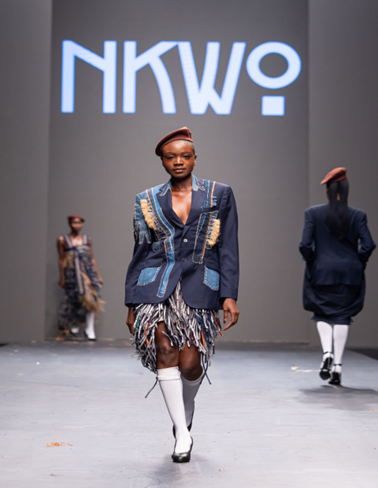
Sustainable design brand Nkwo on the runway at Lagos Fashion Week 2025. (Credit: Omoyemi Akerele, Lagos Fashion Week)
What’s Next?
Omoyemi’s vision is ambitious: connect creativity, culture, and circular practices across Africa, shaping a future where sustainable fashion is the norm, not the exception. She aims to inspire communities to rethink how fashion is produced, consumed, and valued, centering sustainability in Africa’s cultural identity.
Advice for Young Changemakers
To those who would follow in her footsteps, Omoyemi has this guidance to offer:
Find your passion. Start with something you care deeply about.
Start small and be impact-driven. Embrace humble beginnings and focus on the impact you want to create.
Stay curious. Experiment and learn as you go.
Build community. Collaboration is key to scaling impact. Let culture, creativity, and community guide your approach.
“Sustainability isn’t just about big systems,” Omoyemi says. “It’s about everyday actions and creative solutions that can grow into something bigger.”
You can connect with Omoyemi via LinkedIn to follow her journey and learn more about her work in fashion and sustainability. And if you know of any other young innovators I should interview, reach out to me there as well!
Ezinne is a passionate advocate for sustainable development and human rights, actively contributing to global initiatives led by PwC, the UN, and the World Bank, among others. She has received international recognition for leadership and innovation and has represented her native Nigeria at global climate fellowships. With a strong interest in technology-driven solutions, Ezinne supports Micro, Small, and Medium Enterprises (MSMEs) and shares insights through global platforms like the UN and Google Women Tech Makers.